What Is an Air Gap in Plumbing?
An air gap in plumbing is a simple but important feature designed to protect a clean water supply from contamination. It creates a physical space between the end of a water supply pipe and the point where water could potentially flow back into that pipe. While the idea is straightforward, an air gap plays a critical role in preventing dirty or contaminated water from entering a safe drinking-water system.
You may encounter air gaps in kitchens, bathrooms, commercial buildings, water treatment systems, and other plumbing installations. They are particularly important wherever there is a risk of backflow. Understanding how an air gap works can help homeowners, property managers, and anyone planning plumbing work make better decisions about water safety and system design.
How Does an Air Gap Work?
An air gap works by keeping two water systems physically separated. Instead of allowing a pipe to connect directly to a drain, tank, basin, or other potentially contaminated source, the supply outlet ends above the receiving point.
Because there is an open space between the two, contaminated water cannot normally travel backward through the air into the clean-water supply.
For example, imagine a faucet positioned above a sink. If the faucet outlet is below the sink’s flood level and the sink becomes filled with contaminated water, that water could potentially enter the faucet and travel backward into the supply line. With an appropriate air gap, the outlet remains separated from the receiving water, creating a barrier against this type of backflow.
The exact air-gap distance depends on the plumbing application, local requirements, and the type of connection involved. It should never be assumed that one measurement applies to every installation.
Why Is an Air Gap Important in Plumbing?
The main purpose of an air gap is backflow prevention. Backflow occurs when water moves in an unintended direction through a plumbing system.
There are two common situations that can contribute to backflow. Back-siphonage can happen when pressure in the water supply drops and water is pulled backward. Backpressure can occur when pressure on the downstream side becomes greater than the pressure in the supply system.
Either situation can create a pathway for contaminated water to enter a potable water system.
An air gap eliminates the physical connection needed for this type of contamination to occur. That makes it one of the most reliable forms of backflow protection because it does not depend on a mechanical valve opening and closing correctly.
Where Are Air Gaps Commonly Used?
Air gaps can be found in several areas of residential and commercial plumbing.
Kitchen Dishwashers
Dishwasher installations are a familiar example. In many plumbing configurations, a dishwasher drain hose connects through an air-gap device mounted near the sink. The device helps prevent wastewater from flowing back toward the dishwasher.
The exact setup varies by location and plumbing design. Some installations use alternative approved methods, so homeowners should check applicable local requirements rather than assuming an air-gap fitting is always mandatory.
Faucets and Fixtures
Certain faucets and plumbing fixtures are designed with an air gap between the water outlet and the receiving fixture. This is particularly important where the receiving water could become contaminated.
For example, the relationship between a faucet and a sink needs to be designed so that the water outlet does not become submerged during normal or abnormal conditions.
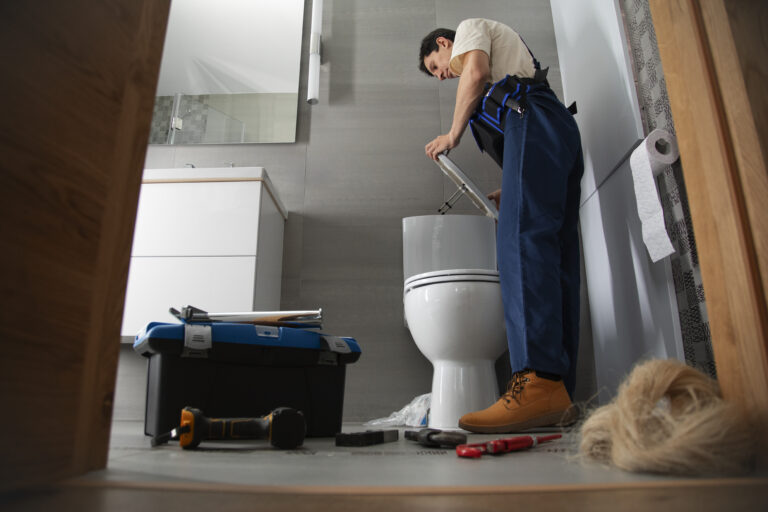
When planning a bathroom, understanding the location and installation requirements of fixtures such as a water closet in plumbing can also help ensure that clean-water and waste systems remain properly separated.
Water Treatment Equipment
Water softeners, reverse-osmosis systems, and other treatment equipment may require air-gap protection depending on their design.
These systems often discharge wastewater into a drain. Without appropriate protection, a drain connection could create a pathway for contaminated water to move toward the potable water supply.
Air Gap vs. Air Break: What Is the Difference?
Air gap and air break are sometimes confused because both involve separation between plumbing connections. However, they are not necessarily the same thing.
An air gap generally refers to a physical vertical separation between the water outlet and the receiving level. The separation is designed to prevent backflow through direct contact.
An air break may involve a physical separation in a drainage arrangement where the receiving pipe or receptacle is not directly connected to the discharge pipe. The technical requirements and applications can differ.
Because plumbing terminology and code requirements vary, the safest approach is to identify the specific fixture and connection before deciding which protection method is appropriate.
How Air Gaps Fit Into a Plumbing System
A plumbing system contains much more than supply pipes and faucets. Water distribution, drainage, fixtures, valves, and pressure-control components all need to work together.
During the rough in plumbing stage, important pipe locations and connections are established before walls and finishes are completed. This is an important time to consider how fixtures will drain and how potable water will be protected from contamination.
Planning these details early can prevent expensive modifications later. A poorly positioned drain or improperly connected fixture may create problems that are difficult to correct once walls, cabinets, or flooring are finished.
What Happens If an Air Gap Is Blocked?
An air gap needs to remain open to perform its intended function. If dirt, debris, mineral buildup, or other material blocks an air-gap opening, water may not drain properly.
In some fixtures, a blocked air gap can cause water to appear around the fitting or discharge from an unexpected location. This does not necessarily mean the entire plumbing system has failed.
Regular inspection can help identify visible buildup or blockage. Cleaning procedures depend on the particular fixture, so the manufacturer’s instructions should be followed.
Never remove an air-gap device simply because it appears unnecessary. Doing so may eliminate an important form of backflow protection.
Air Gaps and Plumbing Pressure
Water pressure is another important part of plumbing design. Components such as a prv in plumbing can regulate downstream water pressure and help protect fixtures and piping from excessive pressure.
However, pressure regulation and backflow prevention serve different purposes. A pressure-reducing valve manages water pressure; it does not automatically provide the same protection as a physical air gap.
Similarly, other components can control flow or pressure without replacing the need for an approved backflow-prevention arrangement where one is required.
Understanding these differences helps prevent the common mistake of assuming that one plumbing component can perform every safety function.
What About a Plumbing Manifold?
Modern water distribution systems may use a manifold to organize and distribute water to individual fixtures or branches. A manifold can make certain supply systems easier to isolate and maintain.
However, a manifold does not replace an air gap. The two components have completely different functions.
The manifold manages water distribution, while the air gap protects against certain types of backflow. Good plumbing design considers both the distribution system and the protection required at individual fixtures.
Is an Air Gap Always Required?
Not necessarily. Whether an air gap is required depends on the plumbing application, fixture, local regulations, and approved alternative methods.
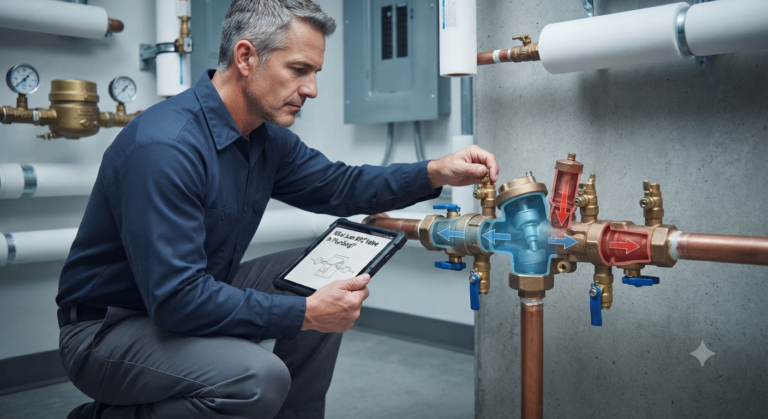
Some situations may permit a mechanical backflow-prevention device instead of a traditional air gap. Other applications may specifically require an air gap because of the level of contamination risk.
For this reason, plumbing work should be designed according to the applicable plumbing code and the requirements of the local authority having jurisdiction.
How to Know If Your Plumbing Needs an Air Gap
If you are installing a new fixture, replacing a dishwasher, adding water-treatment equipment, or modifying a drainage connection, look carefully at how the clean-water supply and wastewater systems interact.
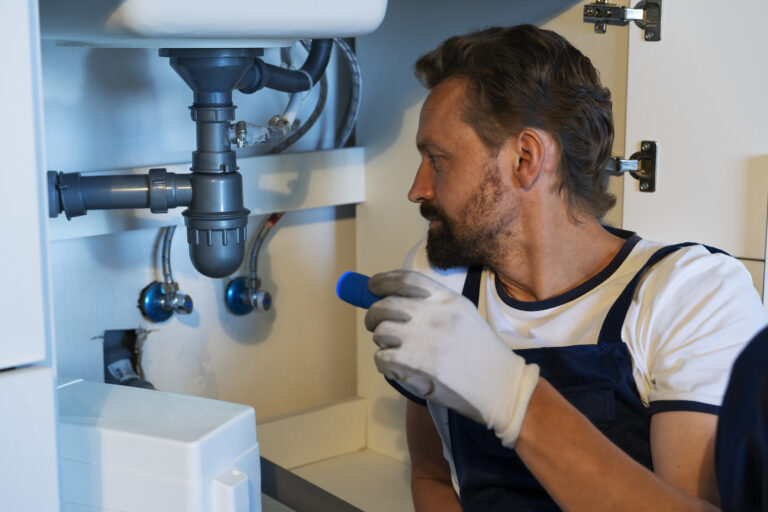
Ask a qualified plumber to evaluate the installation if there is any possibility of cross-connection. This is especially important in older properties where plumbing may have been modified several times.
A professional can identify potential backflow risks and determine which protection method is appropriate for the specific installation.
Final Thoughts
An air gap in plumbing may look like nothing more than a small open space, but its role is much more important. By physically separating a clean-water outlet from a potentially contaminated source, it provides a dependable barrier against backflow.
Air gaps are commonly associated with dishwashers, faucets, water-treatment equipment, and other plumbing applications where contamination is a concern. They work differently from pressure-control devices, manifolds, and mechanical backflow preventers, so each component should be used for its intended purpose.
If you are planning plumbing work, pay attention not only to where pipes connect but also to how the system protects the water supply. Proper separation, correct fixture installation, and compliance with current local plumbing requirements can help keep a plumbing system safe, reliable, and functional for years to come.