Understanding MIP in Plumbing: A Comprehensive Comparison Guide
If you’ve ever shopped for plumbing fittings or looked at a pipe specification, you’ve probably seen the abbreviation MIP. For beginners, terms like MIP, FIP, NPT, PEX, RPZ, and PRV can quickly become confusing. Understanding these plumbing abbreviations is essential when repairing water lines, installing fixtures, or replacing fittings.
MIP (Male Iron Pipe) is one of the most commonly used threaded connection types in residential and commercial plumbing. It works together with FIP (Female Iron Pipe) fittings to create secure, leak-resistant pipe connections.
In this guide, you’ll learn what MIP means in plumbing, how it compares to FIP, where it’s used, and how to choose the correct fitting for your project.
What Does MIP Mean in Plumbing?
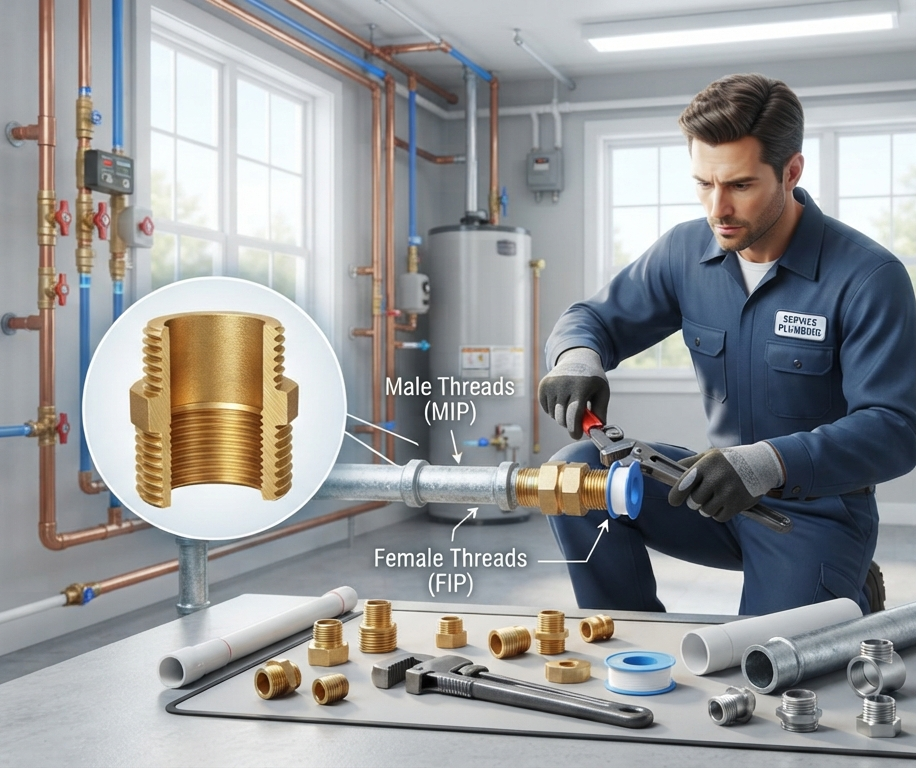
MIP stands for Male Iron Pipe. It refers to a plumbing fitting with external (male) threads that screw into a fitting with internal threads.
Although the name includes the word iron, modern MIP fittings are manufactured from many different materials, including:
- Brass
- Stainless steel
- Galvanized steel
- PVC
- CPVC
The term describes the thread style, not the material.
MIP fittings are commonly used for:
- Water supply lines
- Water heaters
- Outdoor hose bibs
- Shower valves
- Pressure tanks
- Gas piping (with approved materials)
If you’re also learning other common plumbing abbreviations, you may find this guide helpful on fip mean in plumbing.
What is FIP in Plumbing?
FIP stands for Female Iron Pipe. Unlike MIP, an FIP fitting has internal threads designed to accept an MIP fitting.
When joined together with thread sealant, MIP and FIP create a tight, leak-resistant connection suitable for both hot and cold water systems.
Because they are designed to work together, you’ll often see plumbing parts labeled as:
- ½-inch MIP × ¾-inch MIP
- ½-inch FIP elbow
- MIP × FIP adapter
MIP vs. FIP: What’s the Difference?
Although MIP and FIP are complementary fittings, understanding their differences helps you select the correct plumbing component.
| Feature | MIP | FIP |
| Thread Type | External threads | Internal threads |
| Full Name | Male Iron Pipe | Female Iron Pipe |
| Installation | Screws into FIP | Receives MIP |
| Common Uses | Pipe nipples, valves, adapters | Couplings, elbows, tees |
| Materials | Brass, PVC, Steel, CPVC | Brass, PVC, Steel, CPVC |
| Performance | Excellent | Excellent |
Features Comparison
MIP
- External threaded connection
- Easy to install
- Available in numerous sizes
- Compatible with most standard threaded plumbing fittings
- Strong mechanical connection
FIP
- Internal threaded connection
- Creates secure joints with MIP fittings
- Widely available
- Suitable for residential and commercial plumbing
Pricing
MIP and FIP fittings generally cost about the same.
Pricing depends on:
- Material
- Pipe diameter
- Brand
- Pressure rating
Brass fittings usually cost more than PVC but offer greater durability and corrosion resistance.
Ease of Installation
Both fitting types are beginner-friendly.
For the best seal:
- Wrap PTFE (Teflon) tape around male threads.
- Apply pipe thread sealant when recommended.
- Tighten with the proper wrench.
- Avoid overtightening, which can damage the threads.
Proper installation significantly reduces the risk of leaks.
Performance
When installed correctly, both fittings provide:
- Leak-resistant joints
- Long service life
- High pressure tolerance
- Excellent durability
Because the threads create a mechanical seal, they’re commonly used throughout water distribution systems.
Common Applications of MIP Fittings
You’ll commonly find MIP fittings in:
- Water heater installations
- Kitchen plumbing
- Bathroom fixtures
- Irrigation systems
- Boiler systems
- Outdoor plumbing
- Pressure tank connections
- Commercial plumbing systems
Common Mistakes to Avoid
Many plumbing leaks occur because of installation mistakes rather than faulty fittings.
Avoid these common errors:
- Mixing incompatible thread standards
- Cross-threading fittings
- Using excessive force
- Forgetting thread sealant
- Combining incompatible materials without adapters
MIP vs. NPT Threads
Many people wonder whether MIP and NPT are the same.
In most plumbing applications, MIP fittings are manufactured using National Pipe Thread (NPT) standards. While the terms are often used interchangeably, it’s always wise to verify the specifications before connecting different components.
When Should You Use MIP?
MIP fittings are ideal for:
Residential Plumbing
Perfect for faucet connections, water heaters, toilets, and shut-off valves.
Commercial Plumbing
Used extensively in larger plumbing systems because of their strength and reliability.
DIY Plumbing Repairs
Their simple threaded design makes them popular among homeowners performing routine plumbing repairs.
Final Verdict
MIP and FIP fittings work together to create secure threaded plumbing connections. Neither is better than the other—they simply serve different purposes.
Choose MIP when you need a fitting with external threads, and use FIP whenever an internally threaded connection is required.
Whether you’re installing a new water heater, replacing a valve, or completing a plumbing repair, selecting the correct fitting ensures a reliable, leak-free installation that lasts for years.