When Was Indoor Plumbing Invented? A Complete History of Modern Plumbing
Indoor plumbing is something most people rarely think about until a faucet stops working or a toilet overflows. Today, clean running water and modern bathrooms are considered basic necessities, but this convenience took thousands of years to develop. The history of indoor plumbing is filled with remarkable innovations, from ancient civilizations building sophisticated drainage systems to the widespread installation of plumbing in modern homes.
So, when was indoor plumbing invented? The answer is more complex than a single date. Early versions existed thousands of years ago, disappeared in many parts of the world, and then returned in a more advanced form during the 19th and early 20th centuries.
In this guide, you’ll learn how indoor plumbing evolved, who helped shape it, and why it became one of the most important inventions in human history.
What Is Indoor Plumbing?
Indoor plumbing refers to the system of pipes, fixtures, drains, and valves that delivers clean water into a building while safely removing wastewater. A complete indoor plumbing system includes:
- Water supply pipes
- Sinks and faucets
- Toilets
- Bathtubs and showers
- Water heaters
- Drainage and sewer systems
These systems work together to provide sanitation, improve hygiene, and make everyday life far more convenient.
The Earliest Forms of Plumbing
Although many people think indoor plumbing is a modern invention, humans have been developing water systems for thousands of years.
Ancient Civilizations
The earliest plumbing systems appeared around 4000–3000 BCE. Early settlements used simple clay pipes to transport water for drinking and farming.
As civilizations became larger, they developed increasingly advanced methods of supplying water and removing waste.
Ancient Egypt
The Egyptians created copper piping and drainage systems inside some royal palaces. Wealthy families had primitive bathrooms where water could be poured for washing.
Although these systems were limited to the upper class, they represented one of the first attempts at indoor water management.
The Indus Valley Civilization
One of history’s greatest engineering achievements came from the cities of Mohenjo-Daro and Harappa around 2600 BCE.
Many homes featured:
- Private bathrooms
- Covered drainage channels
- Brick-lined sewers
- Household wastewater systems
Remarkably, these cities maintained organized sanitation thousands of years before many later civilizations.
Roman Plumbing Changed Everything
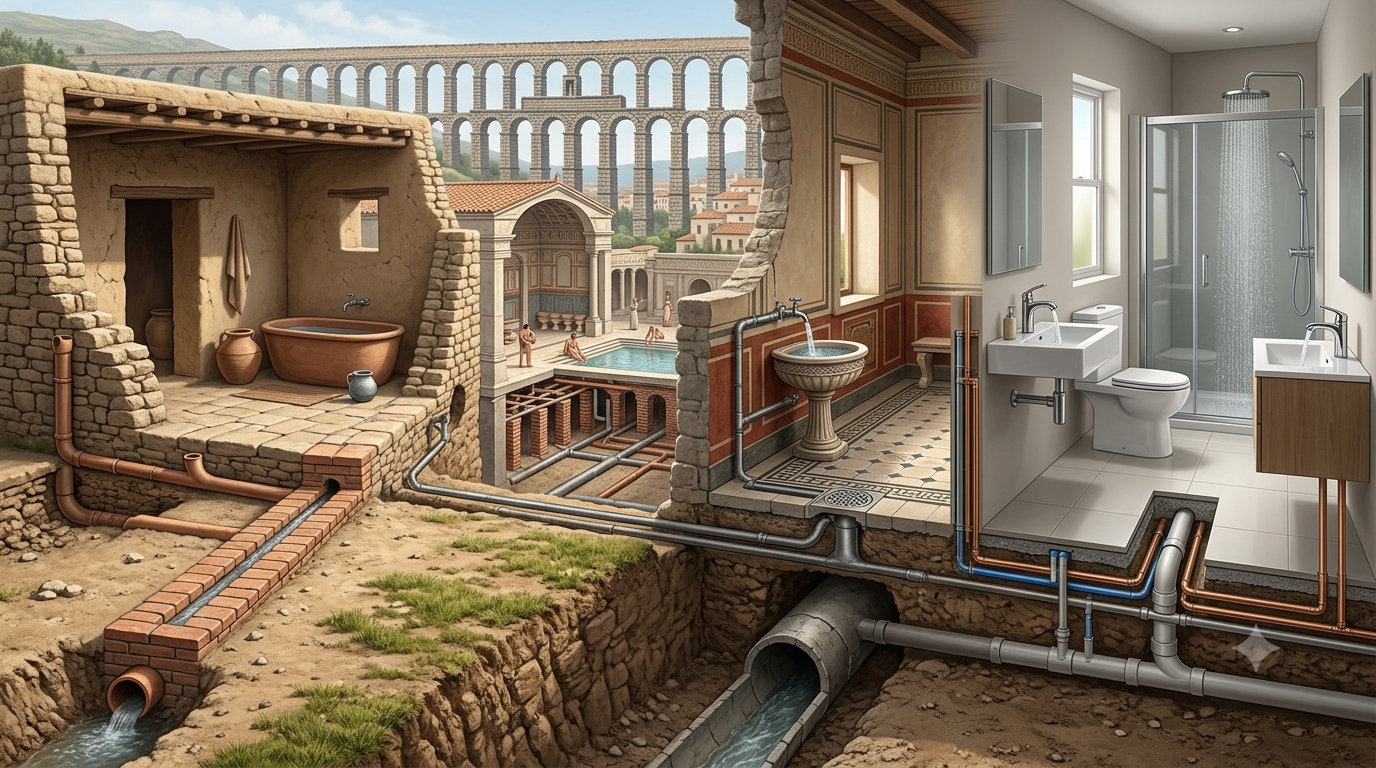
The Romans dramatically improved plumbing technology between 300 BCE and 400 CE.
Their engineers built enormous aqueducts that carried fresh water across many miles into towns and cities.
Roman homes, public baths, and fountains benefited from:
Aqueduct Systems
Gravity-powered aqueducts transported millions of gallons of fresh water every day.
Public Bathhouses
Large bath complexes included heated water, drainage systems, and multiple bathing areas that could serve hundreds of visitors daily.
Indoor Water Supply
Many wealthy Roman homes enjoyed running water connected through lead and clay pipes.
Sewer Systems
One of Rome’s greatest achievements was its underground sewer network, which carried wastewater away from populated areas and helped reduce unsanitary conditions.
Although Roman plumbing was incredibly advanced, much of this knowledge was lost after the fall of the Roman Empire.
Why Indoor Plumbing Disappeared
Following the collapse of Rome, many cities in Europe experienced a decline in engineering knowledge.
Aqueducts fell into disrepair, sewer systems deteriorated, and public sanitation became much less effective.
For centuries, many households relied on:
- Wells
- Buckets
- Chamber pots
- Outdoor latrines
Poor sanitation contributed to frequent disease outbreaks, making clean water a growing public health concern.
The Return of Indoor Plumbing
Indoor plumbing began making a comeback during the 18th and especially the 19th century.
Rapid urban growth created new challenges. Large cities needed safer water supplies and better methods of waste removal.
Engineers responded by improving municipal water systems and underground sewer networks.
At the same time, inventors developed better plumbing fixtures for homes, making indoor bathrooms increasingly practical.
The Invention of the Modern Flush Toilet
Although various flushing devices existed earlier, the modern toilet developed gradually.
Early inventors designed flushing mechanisms centuries ago, but they were expensive and uncommon.
By the late 1800s, several major improvements transformed toilets into reliable household fixtures:
Better Water Supply
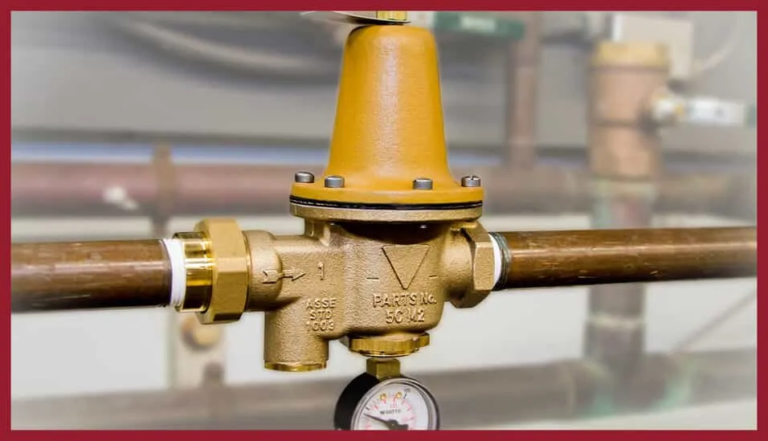
Pressurized municipal water systems allowed toilets to flush consistently.
Improved Sewer Connections
Waste could now travel safely through underground sewer pipes rather than remaining near homes.
More Hygienic Designs
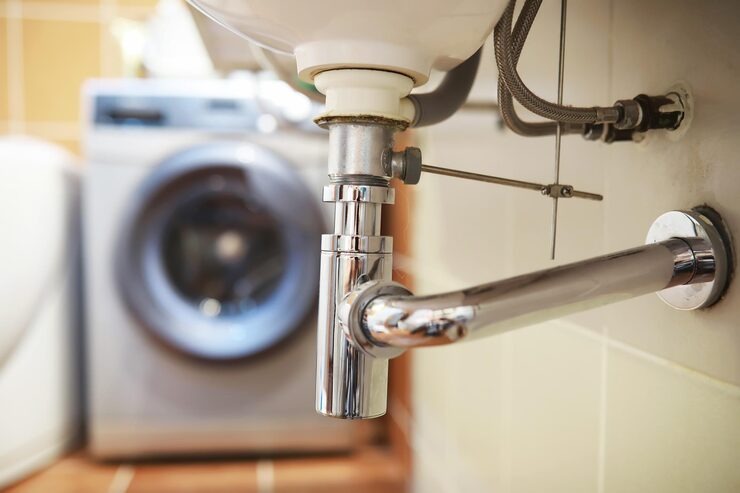
Curved trap systems prevented unpleasant sewer gases from entering buildings while improving sanitation.
These innovations made indoor bathrooms practical for ordinary households instead of only wealthy estates.
When Did Indoor Plumbing Become Common?
Although indoor plumbing existed in various forms for thousands of years, it did not become common in ordinary homes until the late 19th and early 20th centuries.
Industrialization played a major role.
Mass production lowered the cost of pipes, toilets, bathtubs, and sinks. Cities expanded their water treatment facilities and sewer infrastructure, allowing more neighborhoods to connect to reliable plumbing systems.
By the mid-1900s, indoor plumbing had become a standard feature in newly built homes across many developed countries.