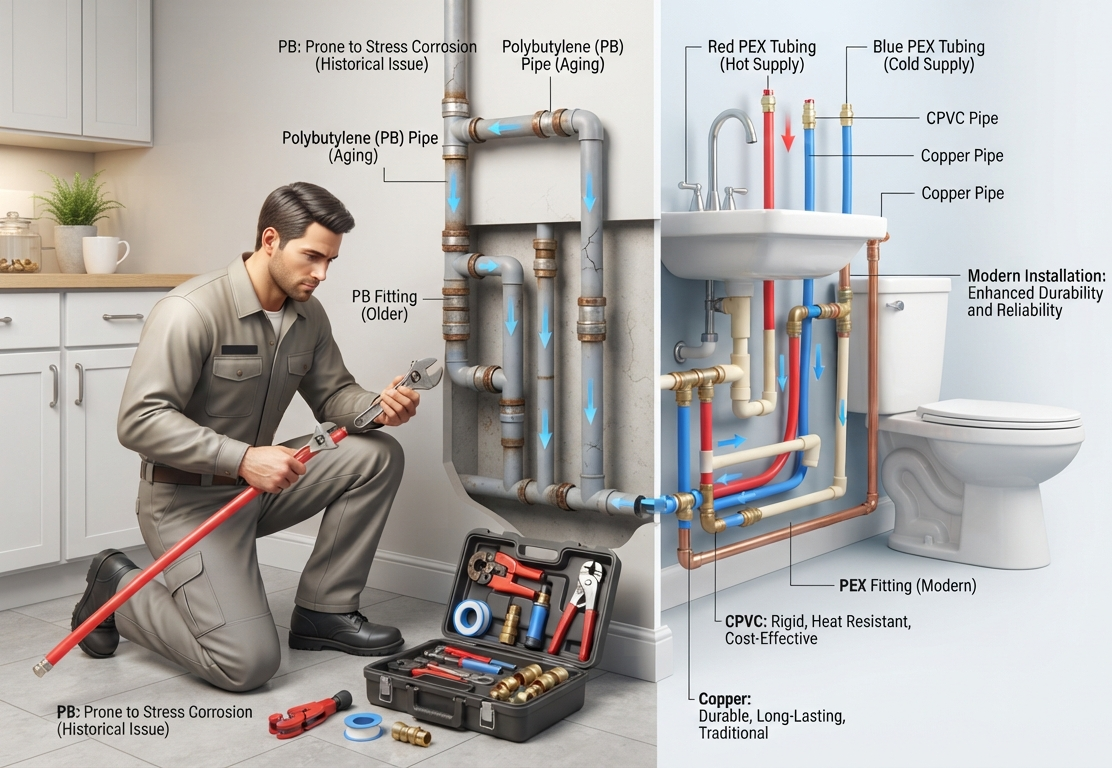
Understanding Polybutylene Plumbing: A Comprehensive Comparison with Modern Alternatives
As homeowners and prospective buyers navigate the complexities of residential plumbing, understanding the differences between various piping materials becomes crucial. Among these materials, polybutylene plumbing has garnered significant attention due to its historical use and associated problems. This article provides a detailed comparison of polybutylene plumbing with modern alternatives, helping you make informed decisions for your home.
Introduction: Why This Comparison Matters
The choice of plumbing material significantly impacts the safety, durability, and value of a home. Polybutylene plumbing, once a popular choice due to its low cost and ease of installation, has been associated with numerous failures and legal issues. Understanding its characteristics and comparing it to newer options like PEX and PVC can help homeowners avoid potential pitfalls, ensuring their plumbing systems are reliable and cost-effective.
Overview of Plumbing Options
Polybutylene Plumbing
Introduced in the late 1970s, polybutylene pipes were widely used in residential plumbing until the mid-1990s. Known for their affordability and flexibility, these plastic pipes were initially hailed as a revolutionary material. However, they have since been linked to frequent failures, particularly when exposed to chlorine in municipal water supplies, leading to leaks and water damage.
PEX Plumbing
Cross-linked polyethylene (PEX) has emerged as a popular modern alternative. Known for its flexibility, resistance to scale and chlorine, and ease of installation, PEX has quickly become the preferred choice for new constructions and pipe replacements.
PVC Plumbing
Polyvinyl chloride (PVC) pipes are commonly used for waste and vent lines, as well as cold water supply lines. They offer durability and resistance to corrosion at a relatively low cost, making them a staple in many plumbing systems.
Head-to-Head Comparison Across Key Factors
Features
- Polybutylene: Flexible, lightweight, and easy to install, but prone to chemical reactions leading to degradation.
- PEX: Highly flexible, temperature resistant, and durable, with excellent resistance to chemical interactions.
- PVC: Rigid and durable, suitable for high-pressure applications, but less flexible for installation in tight spaces.
Pricing
- Polybutylene: Initially low cost but entails high replacement costs due to frequent failures.
- PEX: Moderately priced with long-term savings due to durability and low maintenance.
- PVC: Low to moderate cost, particularly economical for large-scale applications.
Ease of Use
- Polybutylene: Simple to install but challenging to repair due to compatibility issues.
- PEX: Easy to install with minimal joints, reducing potential leak points.
- PVC: Requires precise cutting and fitting, but straightforward once mastered.
Performance
- Polybutylene: Poor long-term performance due to chemical sensitivity and failure risks.
- PEX: Excellent performance, withstanding high temperatures and pressures.
- PVC: Reliable for cold water and waste lines, but not suitable for hot water supply.
Support
- Polybutylene: Limited support and warranties due to discontinued production and known issues.
- PEX: Widely supported with extensive warranties from reputable manufacturers.
- PVC: Good support, with availability of materials and fittings across regions.
Comparison Table
| Factor | Polybutylene | PEX | PVC |
| Features | 2/5 | 5/5 | 4/5 |
| Pricing | 1/5 | 4/5 | 3/5 |
| Ease of Use | 2/5 | 5/5 | 3/5 |
| Performance | 1/5 | 5/5 | 4/5 |
| Support | 1/5 | 5/5 | 4/5 |
Use Case Recommendations
Best for New Constructions: PEX is ideal due to its flexibility, durability, and ease of installation.
Best for Cost-Conscious Projects: PVC is a strong contender, offering reliability at a low cost, especially for cold water lines.
Best for Homeowners with Existing Polybutylene Pipes: Consider replacing with PEX to avoid potential issues with polybutylene.
Final Verdict
For those choosing plumbing materials today, PEX stands out as the clear winner due to its versatility, durability, and comprehensive support. PVC remains a cost-effective option for specific applications. Polybutylene, however, is best avoided due to its well-documented issues and lack of support.
FAQs
- What are polybutylene pipes? Polybutylene pipes are flexible plastic pipes used in residential plumbing, known for their cost-effectiveness but prone to failure.
- How can I identify polybutylene plumbing in my home? Look for flexible, gray or blue pipes, typically with metal or plastic fittings.
- Why is polybutylene plumbing considered problematic? It is prone to chemical reactions that cause degradation, leading to leaks and water damage.
- What should I do if I have polybutylene pipes? Consult a professional plumber for an assessment and consider replacing them with a more reliable material like PEX.
- Is PEX better than PVC for hot water lines? Yes, PEX is more suitable for hot water lines due to its temperature resistance.