How Long Is Plumbing Trade School? A Comprehensive Guide
Embarking on a career in plumbing is a promising choice for many young adults and career changers. Understanding the duration of plumbing trade school is crucial for planning your educational journey and future career. This guide offers a detailed look at how long plumbing programs typically last and what factors affect their length.
Understanding Plumbing Trade School
What is a Plumbing Trade School?
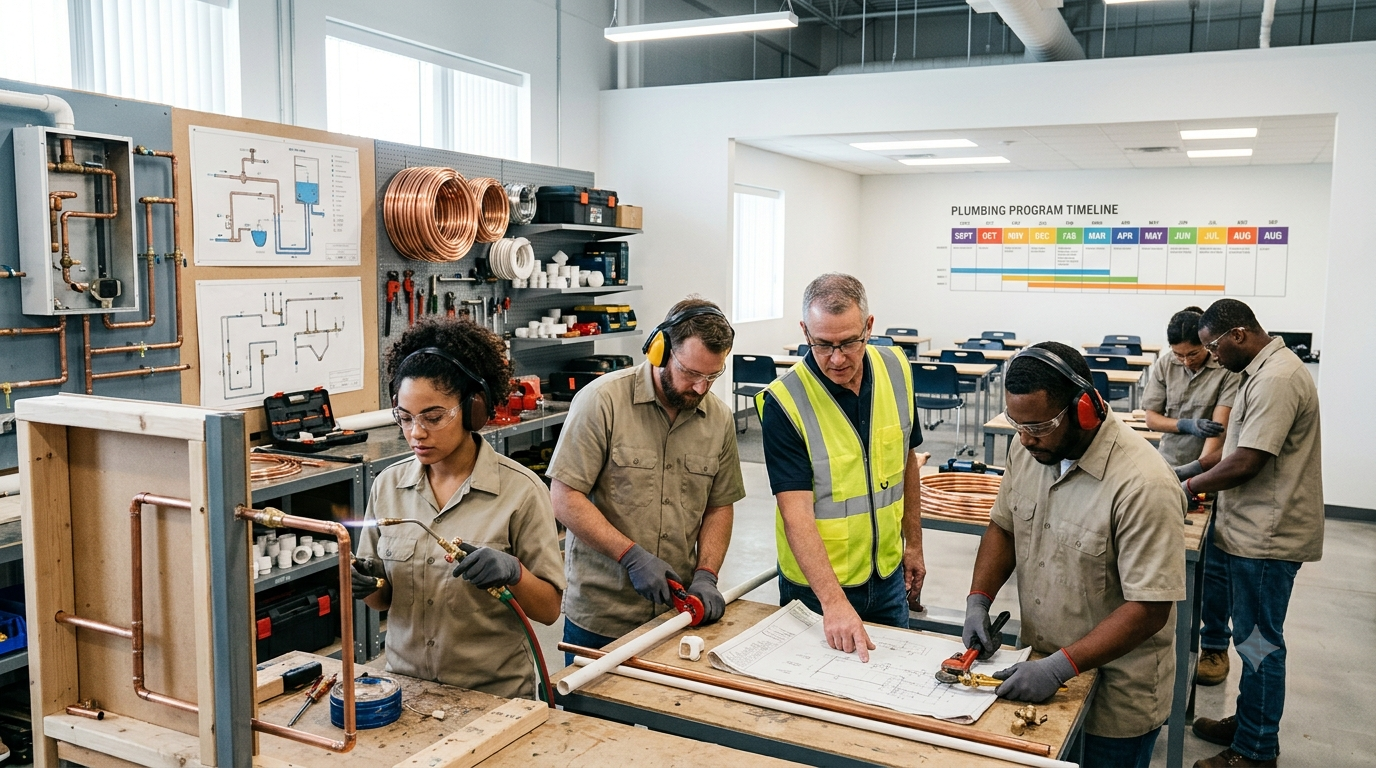
Plumbing trade schools provide vocational training designed to equip students with the skills necessary to work in the plumbing industry. These programs combine classroom instruction with hands-on training, preparing students for various roles, from residential plumbing to specialized fields like green plumbing. As part of their education, students often explore the history of plumbing, including when indoor plumbing was invented, to better understand how modern water supply and sanitation systems have evolved over time.
Duration of Plumbing Programs
Certificate Programs (6-12 Months)
Certificate programs are often the quickest route to entering the plumbing profession. Typically lasting between six and twelve months, these programs focus on fundamental plumbing skills and basic certifications. They are ideal for those seeking to jumpstart their careers with minimal time investment.
Associate Degrees (2 Years)
For a more comprehensive education, many students opt for an associate degree in plumbing. These programs generally take about two years to complete and offer a broader understanding of the field, including courses in plumbing design and advanced systems. An associate degree can enhance job prospects and provide a foundation for further specialization.
Apprenticeships (2-5 Years)
Apprenticeships are a traditional and highly effective way to learn the plumbing trade. Lasting anywhere from two to five years, apprenticeships combine on-the-job training with classroom instruction. This pathway allows aspiring plumbers to earn while they learn, gaining practical experience under the supervision of experienced professionals.
Factors Affecting Program Length
Full-time vs. Part-time Enrollment
Whether you enroll full-time or part-time can significantly impact the time it takes to complete a plumbing program. Full-time students typically complete their education faster, whereas part-time students might take longer due to scheduling flexibility.
Previous Experience and Education
Students with prior experience or related education may qualify for accelerated programs or advanced placement, reducing the overall time required to complete their training.
Financial Considerations and Resources
Tuition and Costs
The cost of plumbing trade school varies widely based on factors like location, program length, and institution type. Prospective students should consider tuition, fees, and additional costs such as tools and materials when budgeting for their education.
Financial Aid and Scholarships
Financial aid and scholarships can significantly offset the costs of plumbing education. Many schools offer resources to help students find funding opportunities, and several scholarships are specifically available for trade school students.
Career Paths After Trade School
Entry-Level Positions
Upon completing a plumbing program, graduates can pursue various entry-level positions such as plumbing technician or installer. These roles provide a stepping stone to more advanced opportunities as skills and experience grow.
Advanced Career Opportunities
With additional experience and education, plumbers can advance to positions like journeyman or master plumber. Specializations in areas such as commercial plumbing or plumbing design can also open doors to lucrative career paths.
Choosing the Right Program for You
Accreditation and Reputation
Choosing an accredited plumbing school ensures that the education meets industry standards. Researching the reputation of institutions can also provide insights into the quality of education and graduate success rates.
Location and Format (Online vs. In-person)
Deciding between online and in-person programs depends on personal learning preferences and lifestyle. Online courses offer flexibility, while in-person classes provide hands-on training that’s critical in the plumbing trade.
FAQs about Plumbing Trade School
- How long does it take to complete plumbing trade school? Depending on the program type, it can take from six months to five years.
- Is a plumbing trade school worth it? Yes, it provides essential skills and credentials needed for a successful plumbing career.
- What qualifications do I need to enroll in a plumbing program? Generally, a high school diploma or equivalent is required.
- Can I work while attending plumbing trade school? Many programs offer flexible schedules to accommodate working students.
- What are the success rates for graduates of plumbing programs? Success rates vary by school; researching individual programs can provide specific data.
- How does on-the-job training compare with trade school education? On-the-job training offers practical experience, while trade school provides theoretical knowledge, both of which are valuable.
- What is the typical schedule for a plumbing trade school? Schedules vary but typically include daytime classes and hands-on workshops.
Understanding the timeframe for plumbing trade education is essential for anyone considering entering this skilled trade. Whether you choose a certificate program, an associate degree, or an apprenticeship, each pathway offers unique benefits and timelines. If you’re ready to start your plumbing career, researching and selecting the right program for your needs is the next crucial step.