Does Homeowners Insurance Cover Plumbing? Everything You Need to Know
Plumbing problems can happen when you least expect them. A burst pipe, leaking water heater, or overflowing washing machine can cause expensive damage to your home in just a matter of hours. When faced with these situations, many homeowners ask the same question: does homeowners insurance cover plumbing?
The short answer is yes—but only in certain situations. Most standard homeowners insurance policies cover sudden and accidental plumbing damage, but they usually do not pay for problems caused by wear and tear, poor maintenance, or gradual leaks.
Understanding what is and isn’t covered can help you avoid unexpected repair bills and make informed decisions when filing an insurance claim.
How Homeowners Insurance Handles Plumbing Damage
Homeowners insurance is designed to protect your home from unexpected events. When it comes to plumbing, coverage generally depends on what caused the damage rather than the plumbing issue itself.
If a pipe suddenly bursts because of freezing temperatures or an unexpected failure, your insurance policy will often cover the damage to your home. However, if the pipe has been leaking slowly for months due to corrosion and lack of maintenance, your claim will likely be denied.
The key difference is whether the damage was sudden and accidental or the result of neglect over time.
Plumbing Problems That Are Usually Covered
Most standard homeowners insurance policies provide coverage for unexpected plumbing-related damage, including:
Burst Pipes
A burst pipe is one of the most common plumbing claims. If a pipe suddenly breaks and water damages your walls, ceilings, flooring, or personal belongings, your insurance will often pay for the repairs, provided the damage wasn’t caused by neglect.
Accidental Water Leaks
Unexpected leaks from plumbing systems, such as a broken water supply line or a failed pipe connection, are commonly covered if they cause immediate damage inside your home.
Frozen Pipes
If freezing temperatures cause your pipes to burst after you’ve taken reasonable steps to keep your home heated, homeowners insurance often covers the resulting water damage. However, if you leave the property unheated for an extended period without precautions, coverage may be limited.
Overflow from Household Plumbing
If a plumbing system suddenly overflows due to an unexpected malfunction, your policy may cover damage to floors, drywall, furniture, and other insured property.
What Homeowners Insurance Usually Does Not Cover
While homeowners insurance protects against many sudden plumbing emergencies, it has important exclusions.
Normal Wear and Tear
Pipes naturally age over time. Insurance companies generally consider corrosion, rust, and deterioration to be maintenance issues that homeowners are responsible for repairing.
Gradual Leaks
A slow leak hidden behind a wall for several months usually isn’t covered because the damage developed over time instead of occurring suddenly.
Poor Maintenance
If a plumbing issue results from failing to maintain your home’s plumbing system, your insurer may deny the claim.
Examples include:
- Ignoring visible leaks
- Failing to repair damaged pipes
- Allowing corrosion to worsen
- Neglecting regular plumbing inspections
Plumbing Repairs
In many cases, insurance covers the water damage caused by a plumbing failure but not the cost of repairing or replacing the faulty pipe, fixture, or appliance that caused the problem. Always review your policy, as coverage varies by insurer.
Does Insurance Cover Water Damage from Plumbing?
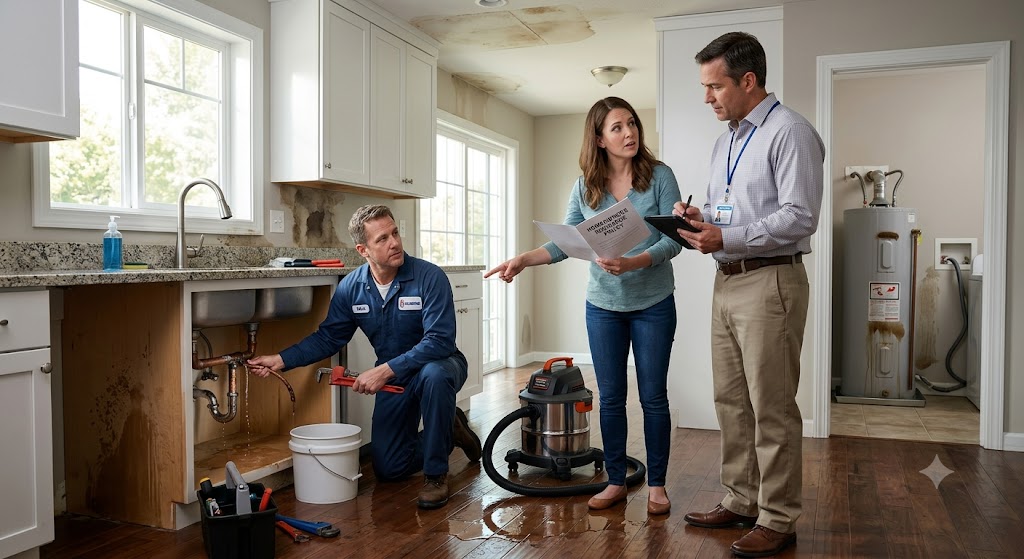
In many cases, yes. If a covered plumbing event causes water damage to your home’s structure, homeowners insurance often pays for repairs to areas such as:
- Drywall
- Flooring
- Ceilings
- Cabinets
- Electrical systems affected by water
- Built-in fixtures
If your furniture, clothing, electronics, or other personal belongings are damaged by a covered plumbing incident, your personal property coverage may also help pay for their repair or replacement, subject to your policy limits and deductible.